

Cabaret Voltaire: Live at Underground Arts, Philadelphia, 9/26/26
By Mark B., Theory of Anything
Since 1973, they have been the sound of Sheffield, the breeding ground for future-forward electronic (eventually industrial) music, with Cabaret Voltaire (affectionately nicknamed the Cabs) having a heavy hand in paving the way for future acts. Their sonic assaults of urban decay and desolate streets, filtered through strangely majestic tape machines and crude synths, soon evolved into danceable synth-funk chaos, which made them truly a standout among their counterparts.
As with most bands pushing toward commercial success, members were lost (keyboardist Chris Watson departed in 1981), the original sound evolved, and the remaining duo (vocalist/bassist Stephen Mallinder and guitarist/keyboardist Richard H. Kirk) eventually achieved modest success, only to drift apart and end the group in 1994. And while Mallinder eventually transitioned into academia in 1995, Richard H. Kirk would continue on under a slew of other aliases.
Although Cabaret Voltaire was revived in 2009 by Richard H. Kirk, functioning as a co-production with the band Kora, hopes for a reunion between the original members truly gained traction in 2014, with a performance at the Atonal festival in Berlin.
However, what soon transpired was a solo performance featuring solely new material by Richard H. Kirk, under the name of Cabaret Voltaire. And while four successive new releases under the moniker would keep hopes alive for fans, the untimely passing of Richard H. Kirk in 2021 seemed to put the possibility to rest.
However, it would be the 50th anniversary of their riot-causing first gig at Sheffield Students' Union in 1975 that would ultimately be the catalyst for the return of Mallinder and Watson to Cabaret Voltaire for their first world tour in over 30 years, which is also serving as a farewell to their fans and the music world alike.
The Cabs landed a perfect sendoff to 50 years of influential musical chaos at Underground Arts in Philadelphia, the last stop on their North American farewell tour. And while Mallinder and Watson have stated that they won't be releasing any new material without Kirk, they are currently promoting But What Time Is It Really?, a newly recorded live album from the first leg of European shows in 2025, as the final release under the Cabaret Voltaire name. The live lineup for the North American shows features cofounder Stephen Mallinder on vocals, bass, and synths; Benge on electronic drums and synths; Eric Random on synths and guitar; and Tara Busch of opener I Speak Machine stepping in for Chris Watson (who was unavailable for the US leg of the tour) on synths and samples.
I Speak Machine opened the highly anticipated show, standing solo on the stage armed with a mic, a rhythm machine, and plenty of clanking electro-punk aggression, tearing through a pounding and energetic 30-plus-minute set. The sounds seeping from the stage could only be described as the distorted synths of industrial greats Coil being played through a rhythmic car engine operated by Richard H. Kirk. Her ferocious vocals were balanced by filthy bass synths and menacing whispers, augmented into an almost call-and-response with backing liminal-esque visuals of nightmarish figures and destruction.
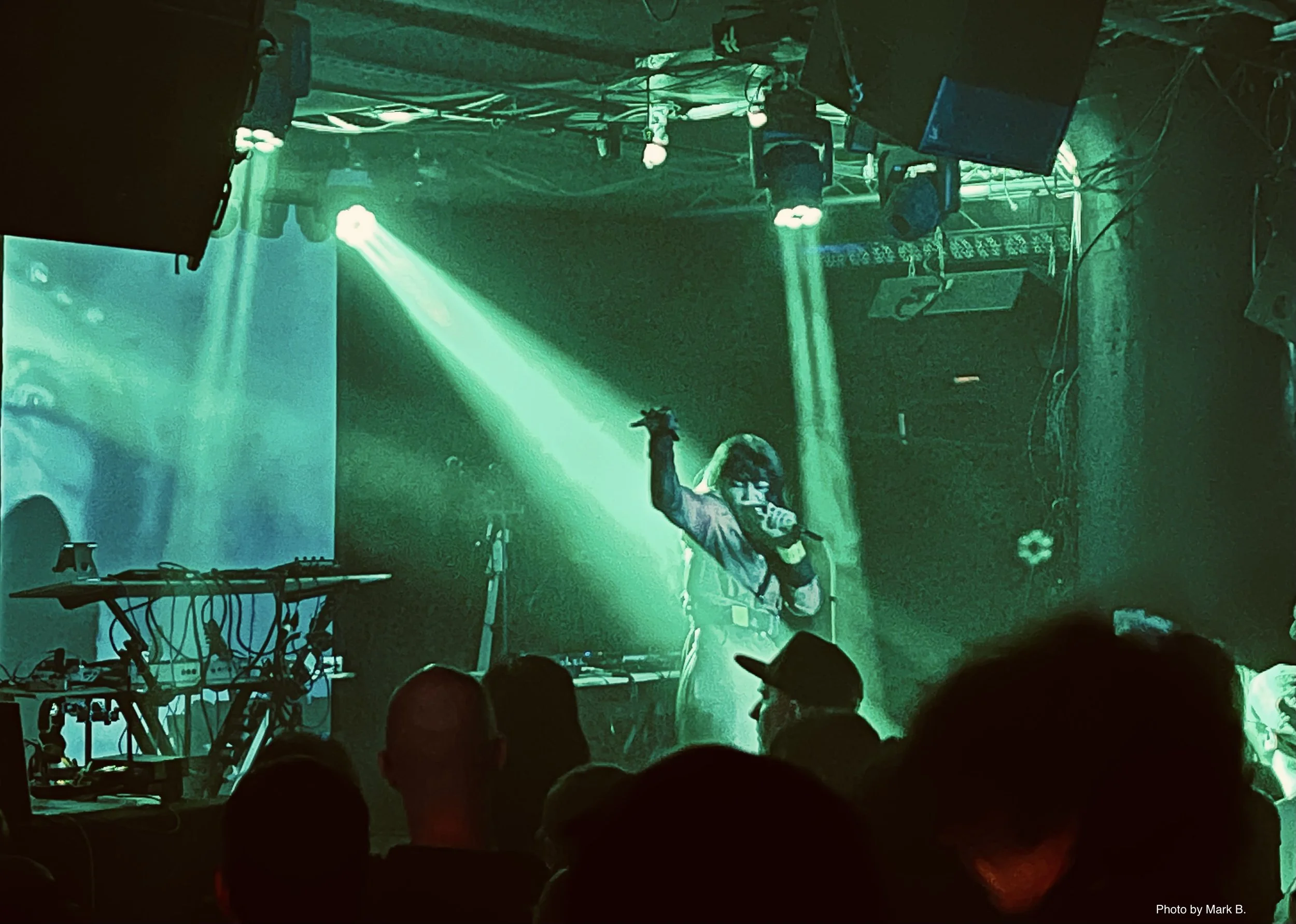
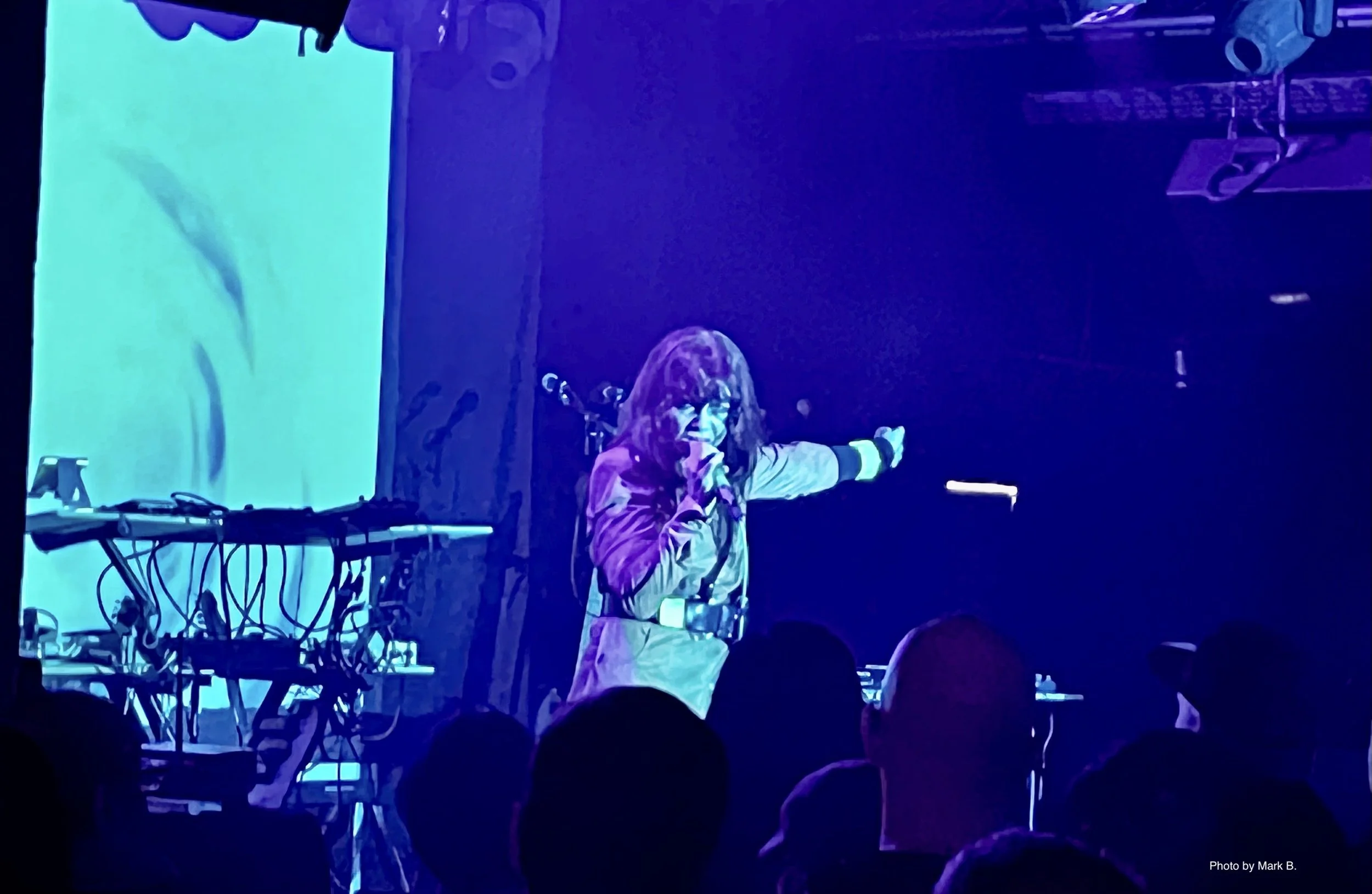
She held a firm command of the stage and made quite the impression on the audience, creating a vibe that perfectly set the stage for the Cabs. Standout cuts like "Eat You Alive," "War," and "Bring Me the Girl" rippled through the crowd, slamming between mechanical rage and a world of abandoned loneliness. After she closed her set, it was easy to understand why the Cabs enlisted her not just to open the night, but to join them in their beautifully desolate cacophony.
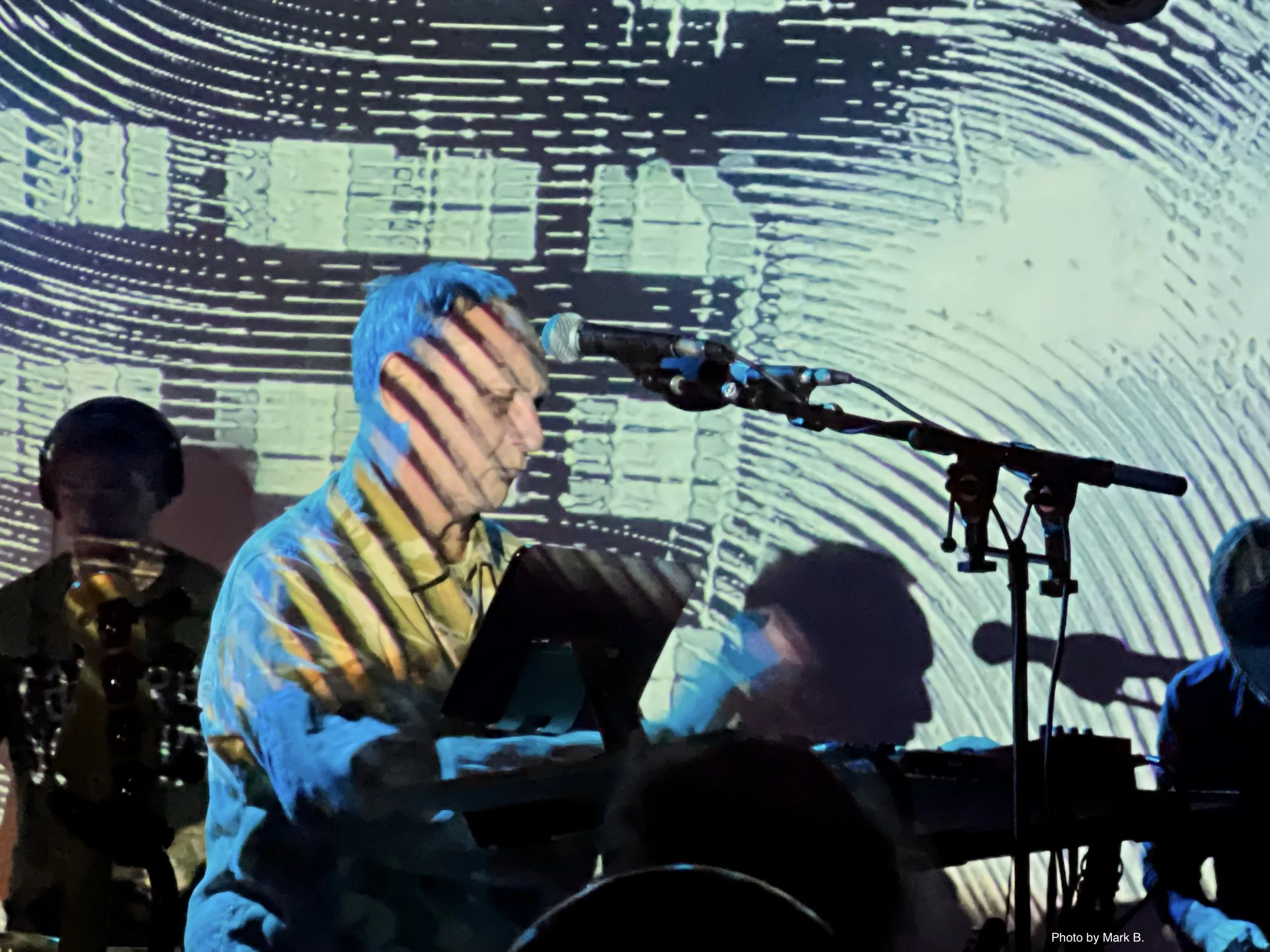
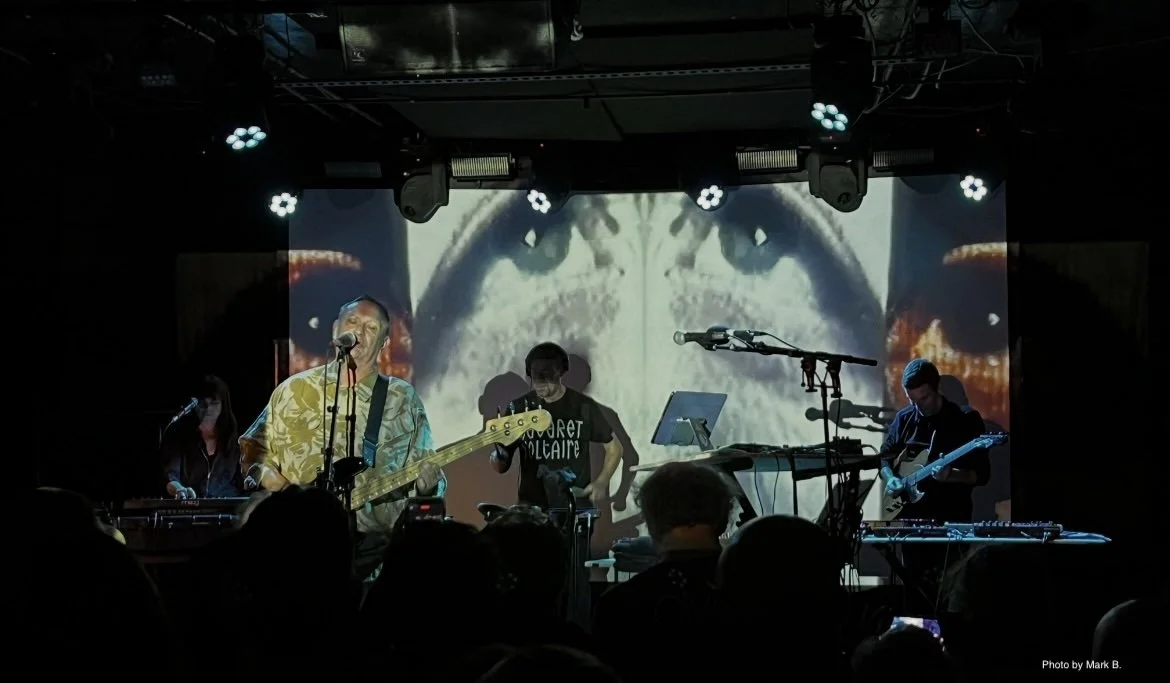
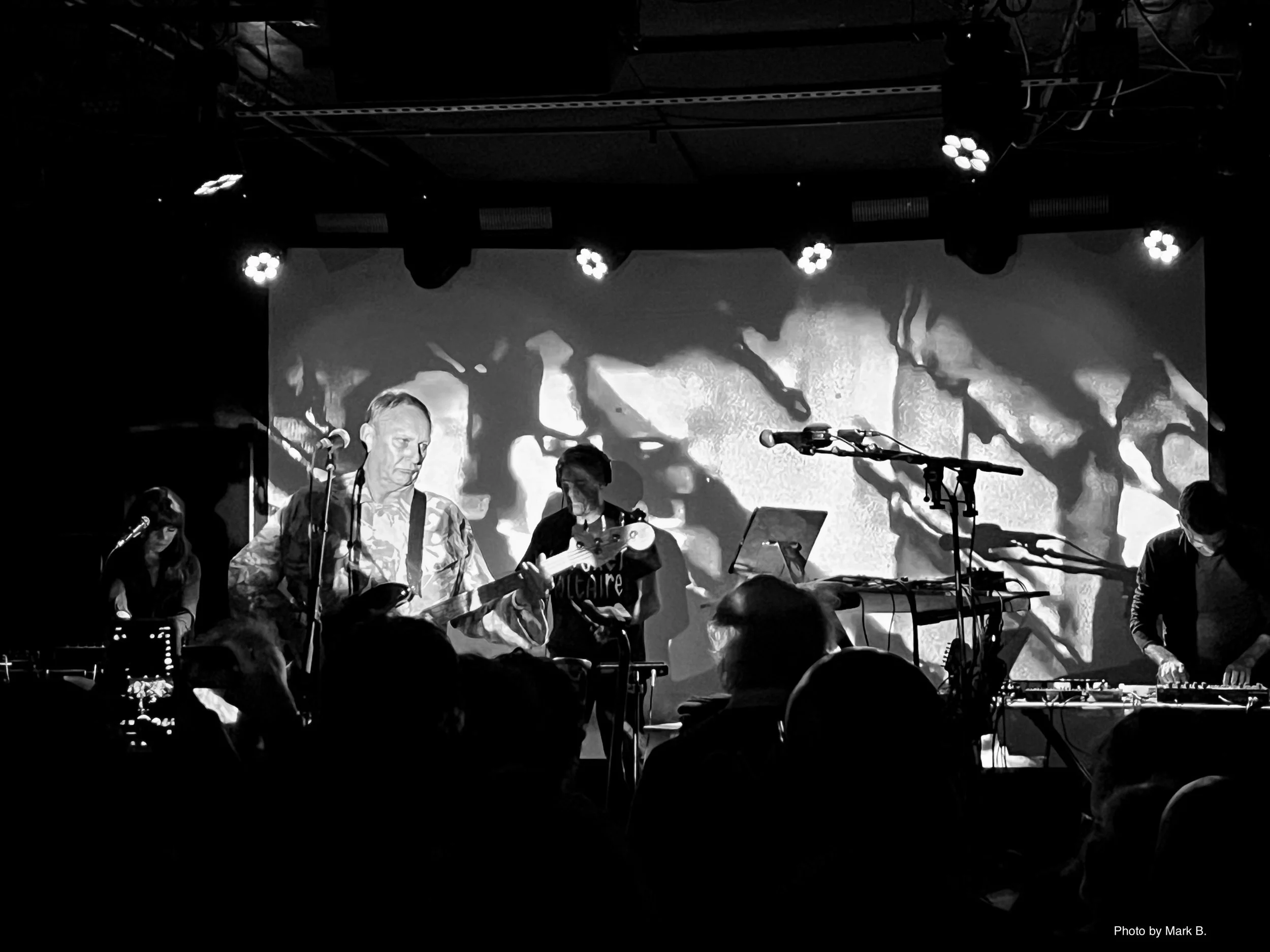
For nearly half an hour, the eclectic crowd eagerly waited in the darkened intimacy of the venue for the return and farewell of Sheffield's living legends, Cabaret Voltaire. And as the lights dimmed, "Theme from Earthshaker" drifted into the room, drastically increasing the intensity, with the gritty basement-level layout of Underground Arts serving as a perfect concrete stage for the band's industrial noise. As Mallinder and co. made their ghostly drift across the stage to take their places, "Theme" slowly faded into the robo-synth squeaks of the opener, "24/24," from 1983's The Crackdown. Over the next 90 minutes, the crowd would get to experience one of the finest final curtains to 50-plus years of electronic music history.
Immediately obliterated was the possibility of one last ride on dated nostalgia, as the oddly more danceable "Why Kill Time (When You Can Kill Yourself)" segued into the 1978 to 1981 grit of "The Set Up" from Extended Play, "Landslide" from Red Mecca, and the sparse crawl of the single "Seconds Too Late," which was turned from gritty mechanical terror into film-noir-level menace that you could vibe to. From that point forward, the Cabs focused more on what might be considered their more "commercial" period, weaving through 1983's The Crackdown ("Crackdown," "Just Fascination"), 1984's Micro-Phonies ("Do Right," "Spies in the Wires"), and the masterpiece of 1987's Code ("Sex, Money, Freaks"). They even made a fleeting stop in their '90s period with "Easy Life" from 1990's Groovy, Laidback and Nasty, when the assembly line of clanking industrial friction made way for house music experimentation.
By the end of the set, the feeling in the venue was equally balanced between the satisfaction of witnessing the living legends perform and the rising thirst for more. And when they finally took the stage for the evening's encore, it felt like a triumphant return rather than a stereotypical audience tease. As amazing as the evening's set was, the encore managed to pack as much of a punch in three songs as the entire setlist had. They kicked it off with 1979's lo-fi electro-punk classic "Nag Nag Nag," which got a thrashier dance-punk boom compared to the original's raw sound. The frantic computer-funk of "I Want You" from 1985's The Covenant, the Sword and the Arm of the Lord cranked up the jams and served as the perfect tee-up for what was arguably their biggest hit on both sides of the Atlantic and one of MTV's most popular tunes, "Sensoria," which was given an audible facelift from electro-funk to a harder-edged, ambient-tinged banger.
As they left the stage for the final time, there was no feeling of rehashing the past, or of being disappointed by a tired, less-than-stellar effort.
It felt as if we were front row center watching the tunes they developed at their Western Works studio get a live retrofit, with the audience getting to be spectators to another moment in history. Farewell to the voice of Sheffield.
Listen to Mark B. on Theory of Anything: An Audio Odyssey - Wednesday nights at 7pm on Radio Garden State