

Dwarves' Blag Dahlia on Four Decades of Punk, the Death of the Scene, and Why Owning Your Records Beats Everything
Radio Garden State's own Rich Temple, host of Temple of Sound, caught up with Blag Dahlia of the legendary Dwarves ahead of the band's new release and a pair of upcoming area shows. What followed was a conversation about survival, eclecticism, violence, and the strange freedom of never quite fitting in.
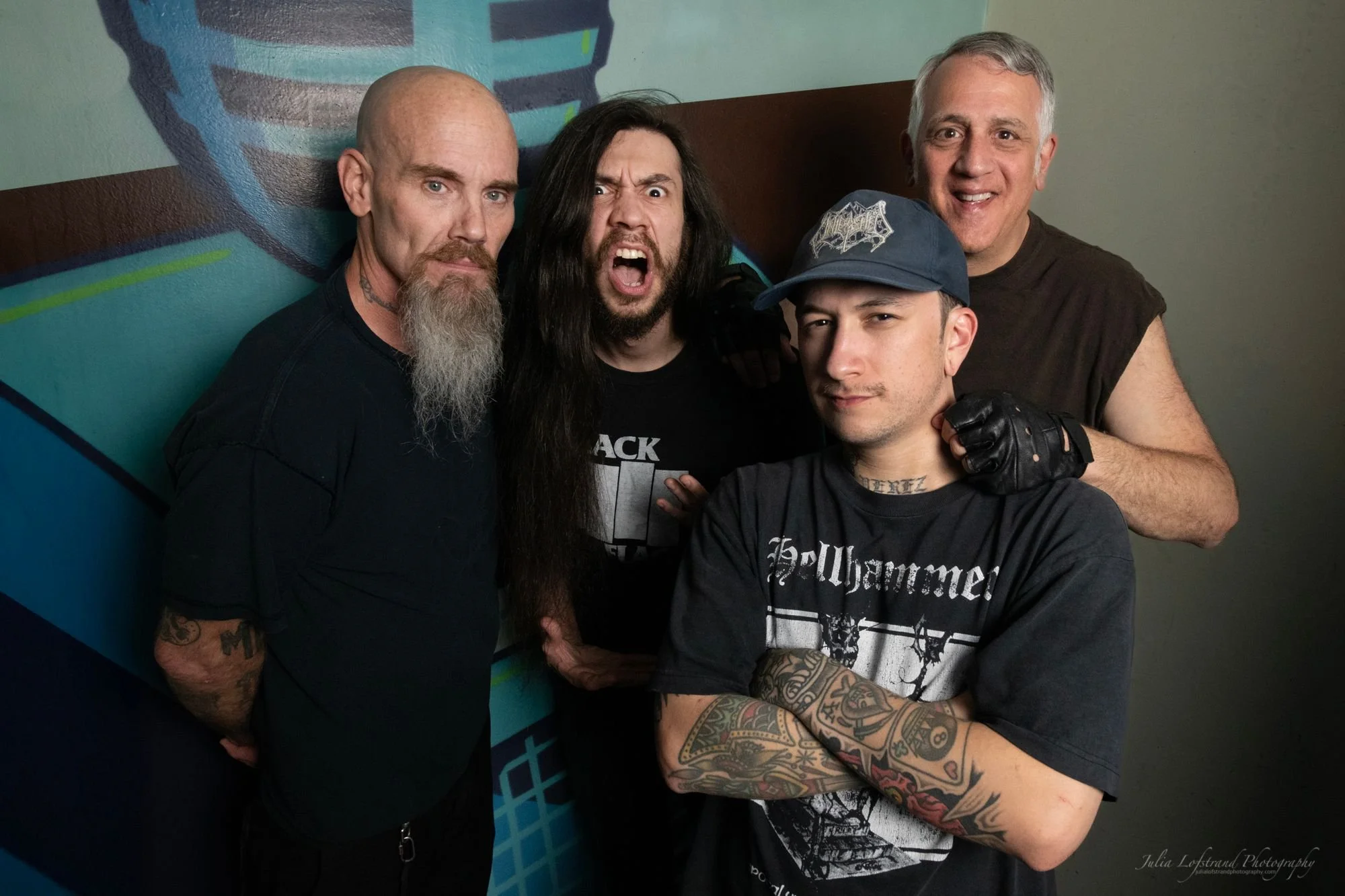
Forty-plus years into one of punk's most unpredictable careers, Blag Dahlia sounds relaxed. Not retired, not nostalgic, just relaxed. The Dwarves, the band he has steered through Chicago, Seattle, Southern California, and seemingly every corner of the underground since the mid-eighties, have a new record coming out, shows booked, and a front man who has made peace with the fact that the music industry never really knew what to do with them.
That, it turns out, was the best thing that ever happened to them.
"Paradoxically, I actually make money in music now," Dahlia told Temple. "A lot of the people who had record deals back then are going, where did all the money and attention go? Record deals are a joke. So that's kind of funny how all this turns around."

From Garage Band to Punk Legends
The Dwarves started in high school in the mid-eighties as a garage band, deep into sixties punk and rock and roll. Playing out more led to fighting more, and fighting more led to the realization that they were a punk band. From there the trajectory was anything but straight.
"We found ourselves in Seattle and became part of what wound up being called the grunge scene," Dahlia said. "We made a few records out that way, a few records in Southern California which was part of the pop punk scene. But basically the Dwarves always kind of stood apart from every scene."
That standing apart was a deliberate aesthetic, not an accident. The band folded in elements of thrash, hardcore, pop, humor, doo-wop, and fifties rock and roll, sometimes within the same record. Temple noted he found that eclecticism genuinely fascinating, particularly in the solo material under Dahlia's Ralph Champagne alias, which leans toward country. Dahlia appreciated the observation but acknowledged it has never been easy commercially.
"People like one sound they can put you in. When you have lots of different sounds, you'd think it would be the Beatles thing where everybody loves you because you're eclectic. But with us, it was always more like, oh wait a minute, they did that one song I hate. We always had one style that was too far for somebody."
Jenkem: Back to Basics
The new record, Jenkem, drops June fifth and represents a deliberate return to the raw aggression of early Dwarves records. It follows the Dwarves Concept Album, which Dahlia described as a sprawling pastiche that went from pop punk with female vocal duets to downtuned metal to straight noise. After that exercise in genre coverage, the instinct was to strip back.
"We just thought, let's go back to basics and make the most basic kind of record," he said. Then, late in the recording process, a curveball arrived: a song called "Damned If I Do" that turned out to be a mid-tempo, eighties-style rock track with a proper guitar lead and a melody that actually sticks.
"It was like, whoa, this is kind of a love song. It's catchy. It's got an eighties guitar lead. I was like, oh, this will be weird. Let's drop this in the middle of this punk album." And so they did. The video features, by Dahlia's account, a lot of fun and a lot of cute females, and the song sits at the center of an otherwise aggressive record like a deliberate provocation.
"You want to keep your fans on their toes, both visually, which we all know about, and also melodically."
Influences: From a Senior's Record Collection to the Decline of Western Civilization
The musical influences that shaped Dahlia's range trace back to one pivotal hitchhiking ride in high school.
"I got picked up by this guy who was a senior and he had a really eclectic record collection. He played me the Velvet Underground. I was like, what the fuck is this? Then he played me the Nuggets records and turned me on to sixties garage. And then within a week or two, Eddie Cochran and Gene Vincent and all the great fifties rock and roll."
Then, within a month, the movie The Decline of Western Civilization put hardcore in front of him for the first time. All of it landed simultaneously, and Dahlia came away with a conviction that fifties rock and roll, sixties garage, seventies punk, and hardcore were all part of the same continuum.
His father's sheet music collection added another dimension entirely, giving him an intuitive familiarity with American popular music going back to the twenties and thirties. That background quietly informs the Ralph Champagne records and his comfort operating outside the punk lane when the song calls for it.
"I feel very lucky about that, because it allowed me to have an intuitive understanding of classic songwriting and arranging." He is also candid about his relationship to musicianship itself: "I'm not a terribly musical person, but I've listened to so many records and I know what I need and who I need to call to get that."
Make it stand out
Whatever it is, the way you tell your story online can make all the difference.
War Stories: New Jersey, Richmond, and the Coconut Teaser
No conversation with Blag Dahlia would be complete without at least a few road stories, and Rich Temple made sure to ask. Dahlia was characteristically understated about it: "I don't like to brag or live in the past. If there are certain stories you know about, I can confirm or deny them."
He confirmed quite a few.
New Jersey came up early. The Dwarves played Maxwell's in Hoboken regularly and had some good shows there, but one excursion deeper into the state drew only three people. Their response was to play the entire set naked. "Somebody had a video camera, which in those days was a little rarer. It was amusing."
In Los Angeles, a show at a club called the Coconut Teaser descended into a full brawl from the first song. By the end of the set, the crowd had physically pushed the band to the back wall. Dahlia went to open the exit door. It was a brick wall. "I could feel like I was going to die. I just started literally punching people to clear them out so I could breathe."
A Richmond, Virginia show went a different way. The band had apparently gotten into a fight there the previous year and forgotten about it. A group of locals remembered. They coordinated with the sound man and lighting tech, killed the lights mid-set, and rushed the stage. What they hadn't accounted for was that the band was elevated and holding equipment. "We just knocked the shit out of them." The story continued into the early morning hours, ending with someone vandalizing the wrong van and a hasty departure at 3 a.m.
The Death of the Scene
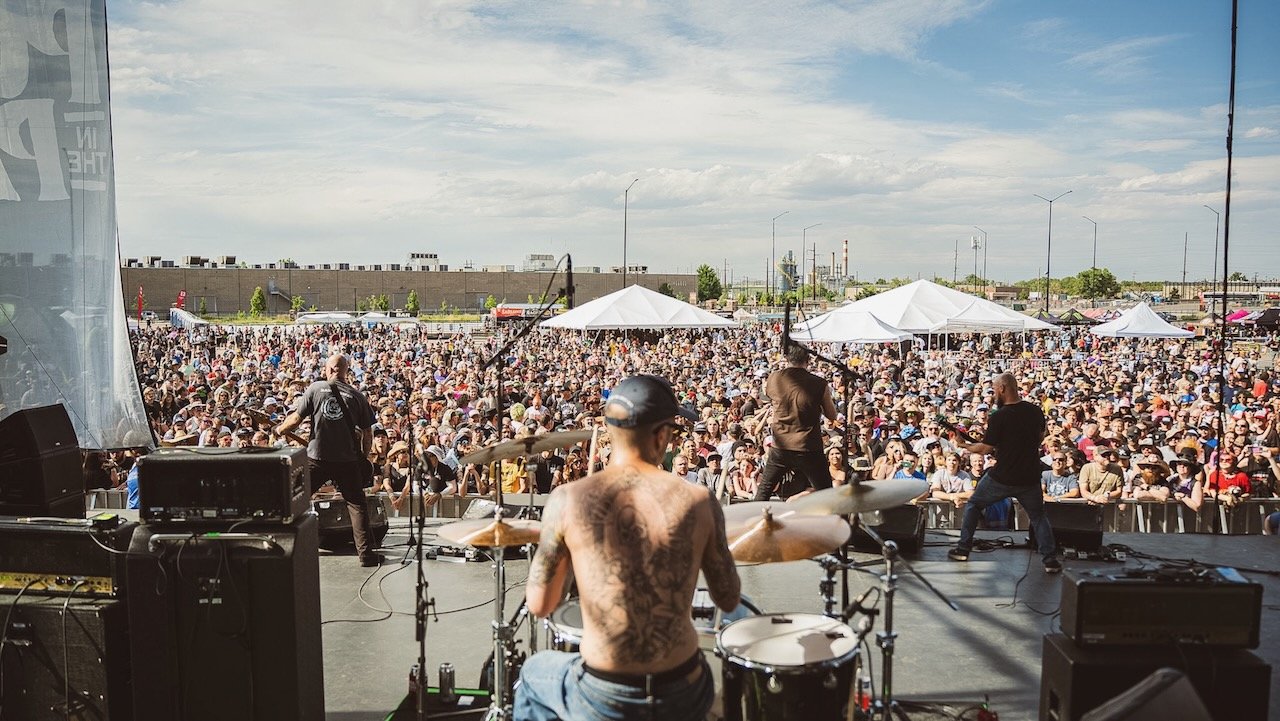
One of the more thoughtful exchanges in the conversation came when Temple and Dahlia reflected on what has happened to local music scenes. Temple noted that even in Philadelphia, a major city with plenty of active bands, the kind of nucleus he remembers from earlier decades is simply absent.
Dahlia put his finger on why. "It lacks a nucleus. Everybody's very atomized, which makes it easier to pick them off, give them bad deals, talk people into shit." The old scenes, for all their rivalries, operated on a rising tide principle: bands competed with each other but also pulled each other up because collective visibility benefited everyone. That interpersonal dynamic, he said, just doesn't exist in the same way anymore.
"There's not really scenes anymore, there's just the internet. Labels and promoters are just looking at individual internet numbers to figure out whether they even want to work with you." The scenes he was part of, whether in Chicago, San Francisco, or the broader grunge and pop punk movements, had specific personalities and geography. That's gone. "You can't fake that. You can't act like a scene is a scene."
He is not particularly bitter about it. The Dwarves were never fully embraced by any of those scenes anyway, and that distance turned out to be protective. They own their records, they call their shots, and they're still standing.
What's NexT
"Dwarves can't stop, won't stop," Dahlia said. "We got this record coming out and a cool video and all that kind of stuff."
For a band that has spent forty years being too much for one crowd and not enough for another, that sounds just about right.
This interview originally aired on Temple of Sound on Radio Garden State.
Listen now on Radio Garden State Patreon for free