

Your Algorithm Has Shit Taste
Teen Mortgage, Alkaline Trio and Rise Against reminded Philadelphia that music still moves best from one person to another.
Rise Against with Alkaline Trio and Teen Mortgage | The Fillmore | Philadelphia, PA
By Elena Stevens | Riot + Reverie
Records used to travel hand to hand
Nobody discovered Alkaline Trio because an app decided they needed more Alkaline Trio. At least not the first time around.
I certainly didn't.
In 2001, I was living in Greece, far enough away from North America that keeping up with what was happening back home felt nearly impossible. Music didn't just appear in front of you. Somebody had to bring it with them. For me, that somebody handed me a copy of Maybe I'll Catch Fire.
It felt like pure gold.
There was no algorithm quietly studying what I listened to, no endless feed waiting to serve me something similar. A record traveled halfway around the world in somebody else's hands, landed in mine and became part of my life. That's how bands used to travel: person to person. Somebody heard them. Somebody bought the record. Somebody burned the CD, made the mixtape, wore the shirt, dragged a friend to the show or turned the volume up and said, listen to this.
Standing inside The Fillmore in Philadelphia more than two decades later, watching Teen Mortgage, Alkaline Trio and Rise Against share a bill, it was hard not to think about how much that still matters. Because this wasn't really three bands from the same genre playing one show. It was three different moments in punk happening in the same room.
Teen Mortgage: two people, one very big stage
Teen Mortgage had the first shift. James Guile and Ed Barakauskas walked onto a stage built to hold considerably more than two people and proceeded to make that fact irrelevant. Guitar. Drums. Volume. That's pretty much the equation.
There's something wonderfully confrontational about a two-piece opening a room that size. There's nowhere to hide and no extra instrumentation to fill the gaps. Either the songs work or they don't. Teen Mortgage worked. Hard.
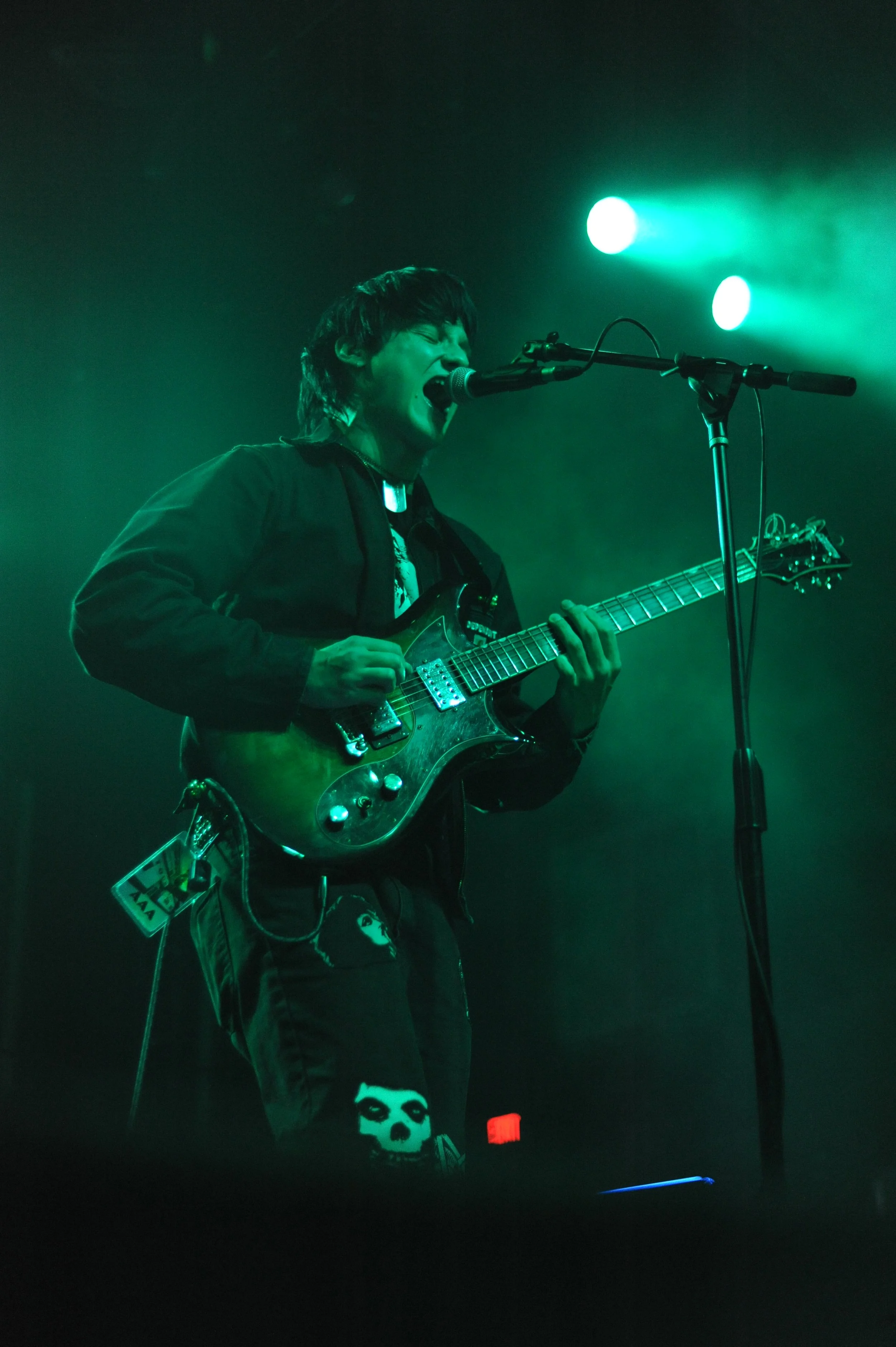
Their set carried that particular energy you get from a band that hasn't yet reached the point where everybody in the room knows what to expect from them. That's the fun part. You can actually watch people discover a band in real time. Heads turn. Conversations stop. Somebody pulls out a phone. Someone asks their friend, "Who is this?"
That's music discovery before somebody turned it into a feature on an app.
Alkaline Trio still sound dangerous
Then came Alkaline Trio.
There are bands you listen to, and there are bands that somehow end up timestamping your life. Alkaline Trio falls into the second category for me. I've been carrying those songs around for more than twenty years, through different cities, different cars, different houses and entirely different versions of myself.
So yes, there's nostalgia attached to hearing Matt Skiba and Dan Andriano sing together. But nostalgia wasn't what made their set interesting.
They still sounded dangerous.
That's harder to pull off than people give bands credit for. When you've been doing this for decades, there's always the possibility that the songs become artifacts. Everybody shows up, everybody sings the old ones, everybody goes home satisfied. This didn't feel like preservation. It felt immediate.
Behind Skiba and Andriano, Tosh Peterson played like someone had forgotten to tell him these songs existed before he got there. He attacks them with the kind of energy that reminds me of what happened when Travis Barker joined Blink-182: new blood, new energy and an obvious love for the instrument he's playing.
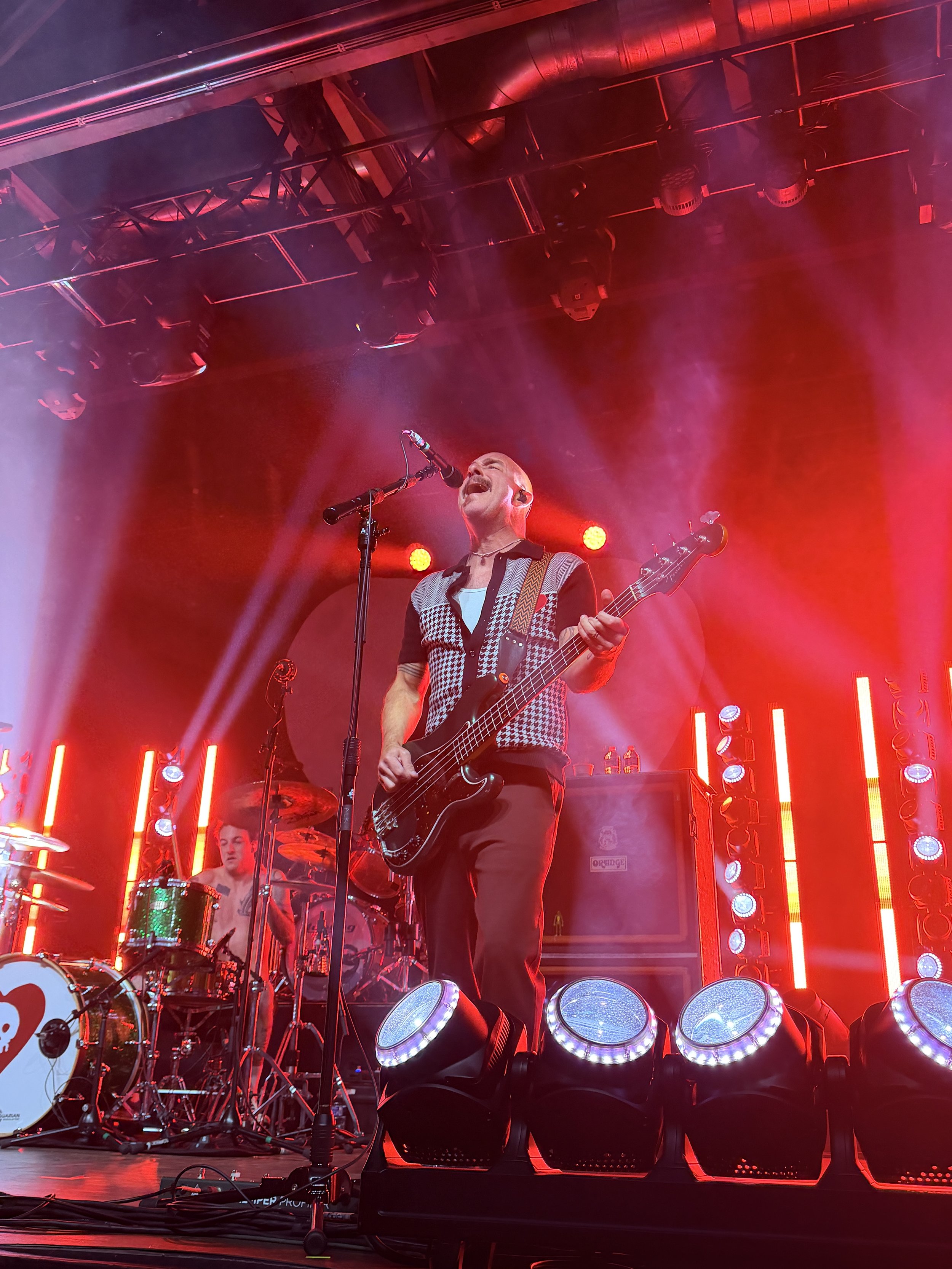
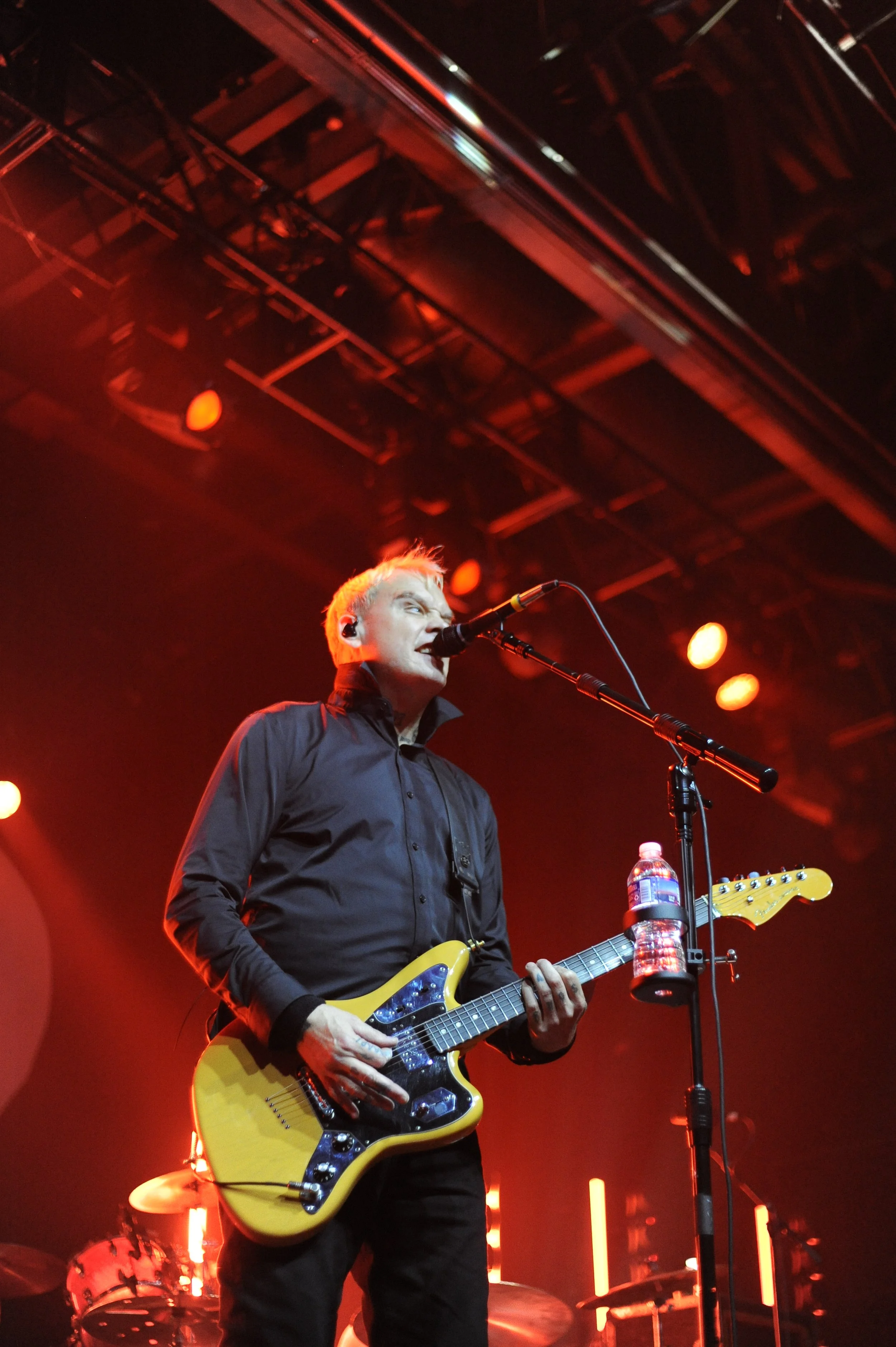
It's not about replacing what was already there. It's about changing the chemistry. Peterson brings that sense of possibility to Alkaline Trio. You can hear what the band has always been, but you can also hear the door cracking open on whatever comes next.
Then "Stupid Kid" landed, and thousands of voices went up. Some of those people probably heard the song when it came out. Some discovered it years later. Some may have heard it for the first time because somebody else wouldn't shut up about Alkaline Trio.
Different routes. Same room.
That's the part of music culture that numbers have never been particularly good at explaining. A stream can tell you somebody pressed play. It can't tell you why a song followed them for twenty years.
Rise Against and the release
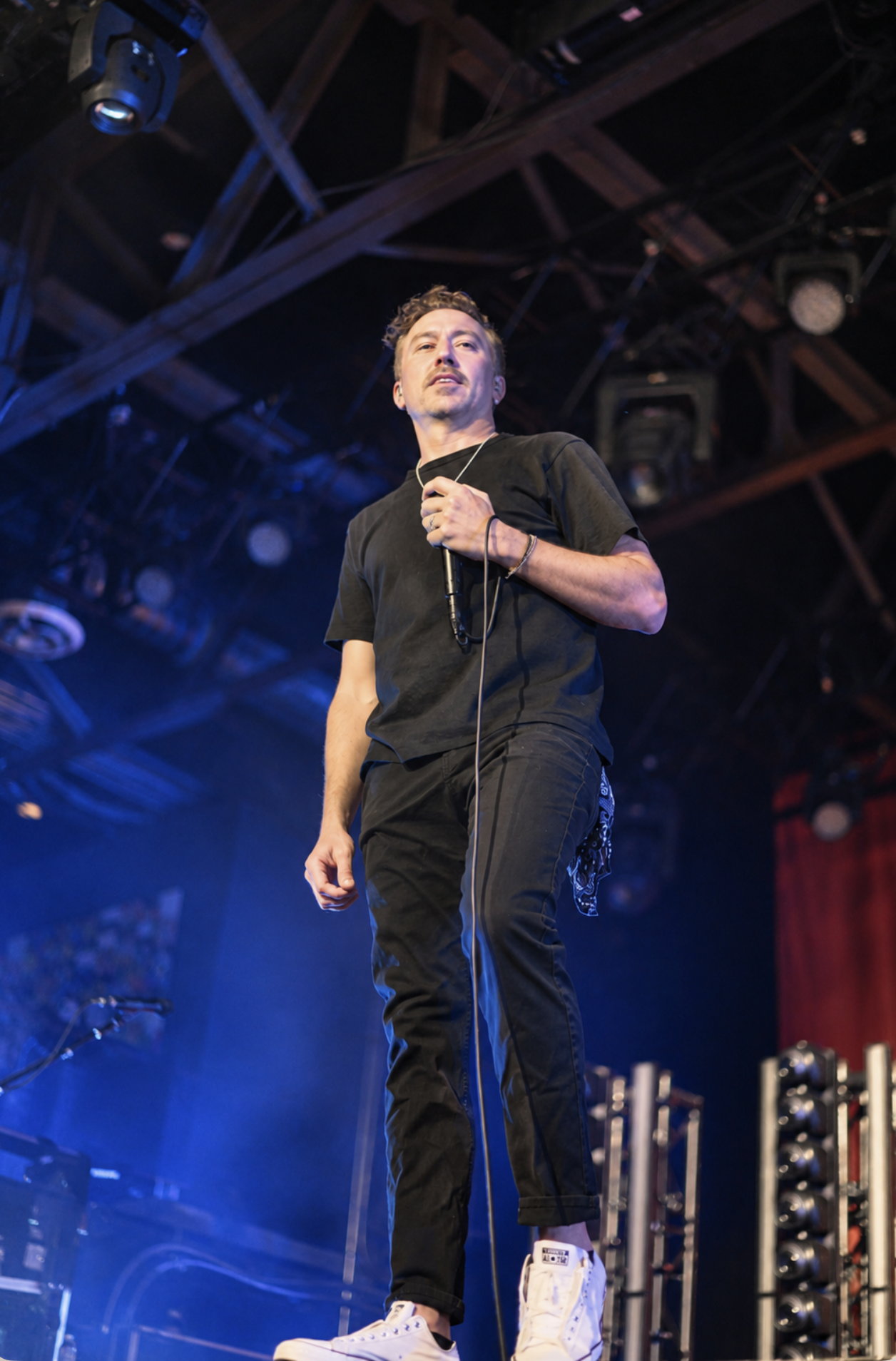
By the time Rise Against took the stage, the Fillmore was no longer warming up. This was release.
Rise Against has spent its career making music that asks something of the person listening to it.
The songs aren't angry simply for the pleasure of being loud. There's intent underneath them, and when Tim McIlrath puts those songs into a room full of people, that intent becomes collective.
And let's face it, the world outside the Fillmore is an absolute shit show right now. Pick your crisis. There's no shortage of reasons to be angry, exhausted or wondering what the hell comes next. That's the kind of climate Rise Against was built for.
"Give It All" doesn't exactly invite passive participation, and neither did the crowd. For a few minutes, all of that frustration had somewhere useful to go.
That's another thing a playlist can't reproduce: the room, the sweat, the stranger next to you screaming the same lyric, the split second when a song stops belonging to the people onstage and becomes everybody's.
By the time Rise Against took the stage, the Fillmore was no longer warming up. This was release.
Rise Against has spent its career making music that asks something of the person listening to it. The songs aren't angry simply for the pleasure of being loud. There's intent underneath them, and when Tim McIlrath puts those songs into a room full of people, that intent becomes collective.
And let's face it, the world outside the Fillmore is an absolute shit show right now. Pick your crisis. There's no shortage of reasons to be angry, exhausted or wondering what the hell comes next. That's the kind of climate Rise Against was built for.
"Give It All" doesn't exactly invite passive participation, and neither did the crowd. For a few minutes, all of that frustration had somewhere useful to go.
That's another thing a playlist can't reproduce: the room, the sweat, the stranger next to you screaming the same lyric, the split second when a song stops belonging to the people onstage and becomes everybody's.
Why radio still matters
That exchange is why live music survives every prediction of its death. It's also why radio still matters.
Not radio as wallpaper. Not another automated stream shuffling songs according to what you've already listened to. I'm talking about somebody sitting behind a microphone because they heard something that knocked them sideways and decided somebody else needed to hear it too.
There's a person on the other end. Taste. Instinct. Bias. Enthusiasm. Occasionally questionable judgment.
Good.
That's how this is supposed to work.
Music culture has always depended on people sticking their necks out for something they love. DJs did it. Record-store clerks did it. Zine writers did it. The friend with the enormous record collection absolutely did it, whether you asked them to or not. Bands did it for other bands, and fans did it for each other.
They still do.
Listen to this
I know because it happened to me that night.
I walked into The Fillmore knowing two bands on the bill. I walked out a fan of all three. Twenty-five years after somebody put an Alkaline Trio record in my hands in Greece, Alkaline Trio helped put another band in front of me in Philadelphia.
That's the whole beautiful mechanism.
I went home and looked up Teen Mortgage. I listened again. And now I'm writing about them here. Maybe somebody reading this looks them up next.
That's how it moves.
You can't chart that moment. You can't optimize it. And you definitely can't manufacture the feeling of someone you trust looking at you and saying, You need to hear this.
There are more ways to find music now than at any other point in history. That's incredible. But access and discovery aren't necessarily the same thing.
Discovery needs curiosity. And the best version of it still needs people.
People willing to play the opener. People willing to show up early. People willing to dig through records, go to small shows, make radio, write about bands nobody is searching for yet and send their friends songs at completely unreasonable hours.
The technology changes. The handoff doesn't.
One person hears something, then turns to somebody else.
Listen to this.
Elena Stevens writes for Riot + Reverie.
Keep New Jersey Loud.